Greenbush, VA
Ant Control in Greenbush
A trail of ants across a counter is a supply line, not a wandering insect. Say where the trail runs and a licensed exterminator can come out to Greenbush and treat the colony rather than the trail.
(844) 578-3029Licensed Virginia technicians. No obligation for the call.
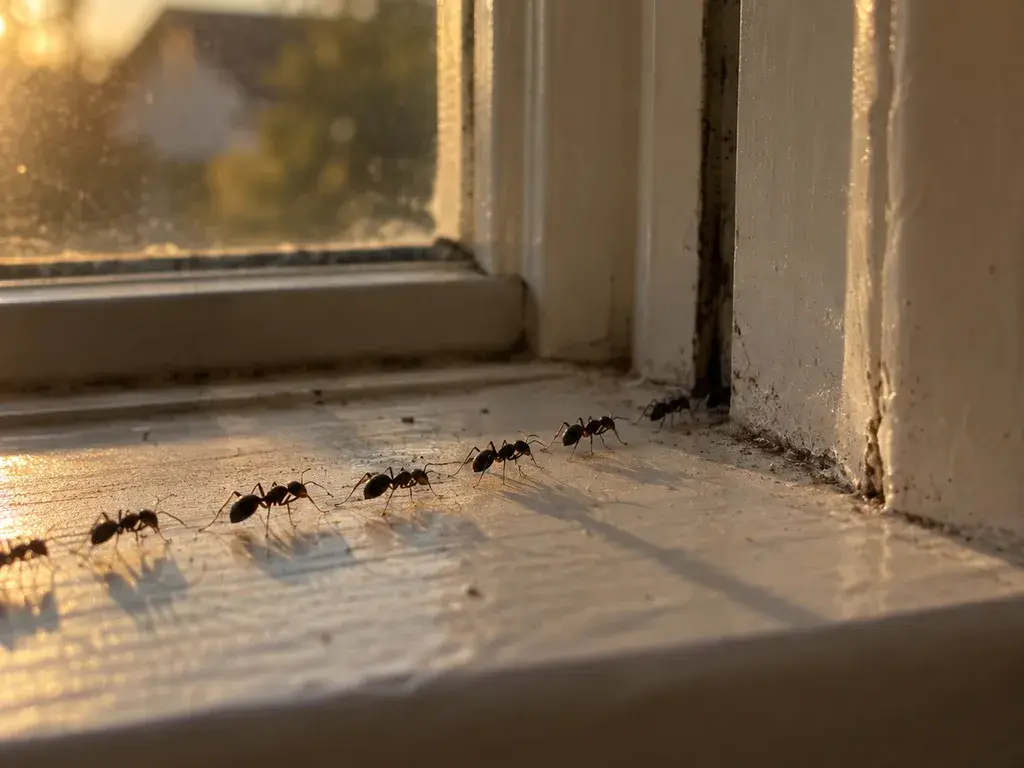
Ants in Greenbush slow down in winter without ever stopping. Frost is brief and shallow, the colony survives whole, and foraging resumes on the first warm week.
The gap between generations stays short, which is why a problem that looked solved in November is back in February. A treatment aimed at a season misses: what works is dealing with the nest rather than the visit.
Being this close to the water keeps the ground damp through the dry months, so Greenbush does not get the summer die-back that inland towns do. Nests stay where they are instead of moving to find moisture.
Why ants do not go away on their own
What you see on the counter is the small part. Behind it sits a nest, and usually more than one: Argentine ants and odorous house ants both split into satellite colonies, and a colony that finds steady water indoors will seed new ones inside wall voids and under the slab.
That is why it feels like it is spreading: it is. Each satellite is closer to your kitchen than the last, and each one is harder to reach than the one before it.
Why the can from the hardware store makes it worse
The spray from the hardware store is a repellent, and that is the problem. It kills what it touches and leaves a barrier the rest of the colony will not cross.
The colony reads that barrier as a threat and buds: the queen splits the nest and moves part of it somewhere else in the structure. Where there was one trail there are now two, and the second one is usually deeper inside the wall.
Professional work goes the other way. Non-repellent products and baits are carried back by the foragers, through the network, to the nests nobody can see. It looks slower for the first few days — the trail is still there — and that is the treatment working.
When to stop trying and call
- The trail came back within a week of spraying, or moved somewhere new.
- There are winged ants indoors — the colony is producing queens.
- You can see more than one trail, or trails on different floors.
- There is anything like fine sawdust near woodwork: that is carpenter ants, and the question becomes structural.
- Someone in the house has reacted badly to a sting.
- License
- Held by the contractor and issued in Virginia. Ask which name it is held under — a trading name and the licensed entity are often not the same.
- Price
- Quoted before the work starts, not after. If a technician cannot say what the visit will cost before beginning, that is the moment to stop.
- The call
- Describing what you found commits you to nothing. Nothing is booked until you say so.
- Coverage
- By town, not by region. Greenbush and the towns around it.
What the visit includes
- 01
Inspection
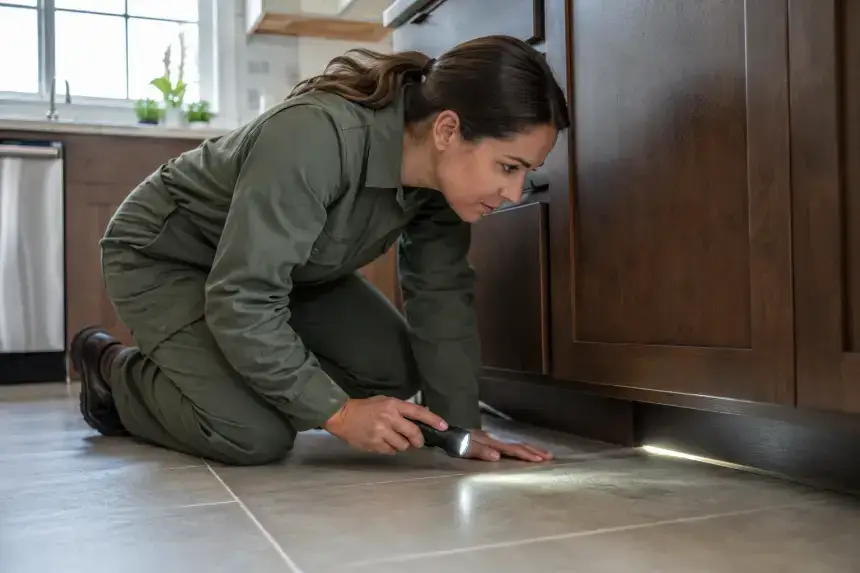
Inside, around the outside, and in the crawl space or slab edge where the trail usually starts. Identification comes before anything is applied.
- 02
The plan, out loud
What the pest is, what the treatment involves, how many visits it takes and what it costs — explained before any work begins.
- 03
Treatment
Aimed at the nest and the route to it rather than at what you can see. Products used indoors are chosen around pets and children in the house.
- 04
The follow-up
Some jobs need a second visit to catch what hatched after the first. A technician says so up front rather than after.
What to say when you call
- 01Where the line begins and where it vanishes — a windowsill, a baseboard, under a sink.
- 02Whether you see it inside, outside, or in both places.
- 03Whether you have seen winged ones. That means the colony is making new queens, and it changes the timing.
- 04Whether anything looks like fine sawdust nearby. That points at carpenter ants and a moisture problem in the structure, which is different work.
Do not wipe the trail before the visit. The line an ant follows is chemical, and washing it away removes the one thing a technician would follow to the entry point. The ants lay a new one somewhere less convenient.
Other pests in Greenbush
Ants nearby