Southern Gateway, VA
Rodent Control in Southern Gateway
Traps catch the mice that are already inside. Closing the way in stops the next ones. Say what you have found and a licensed exterminator can come out to Southern Gateway and do both.
(844) 578-3029Licensed Virginia technicians. No obligation for the call.
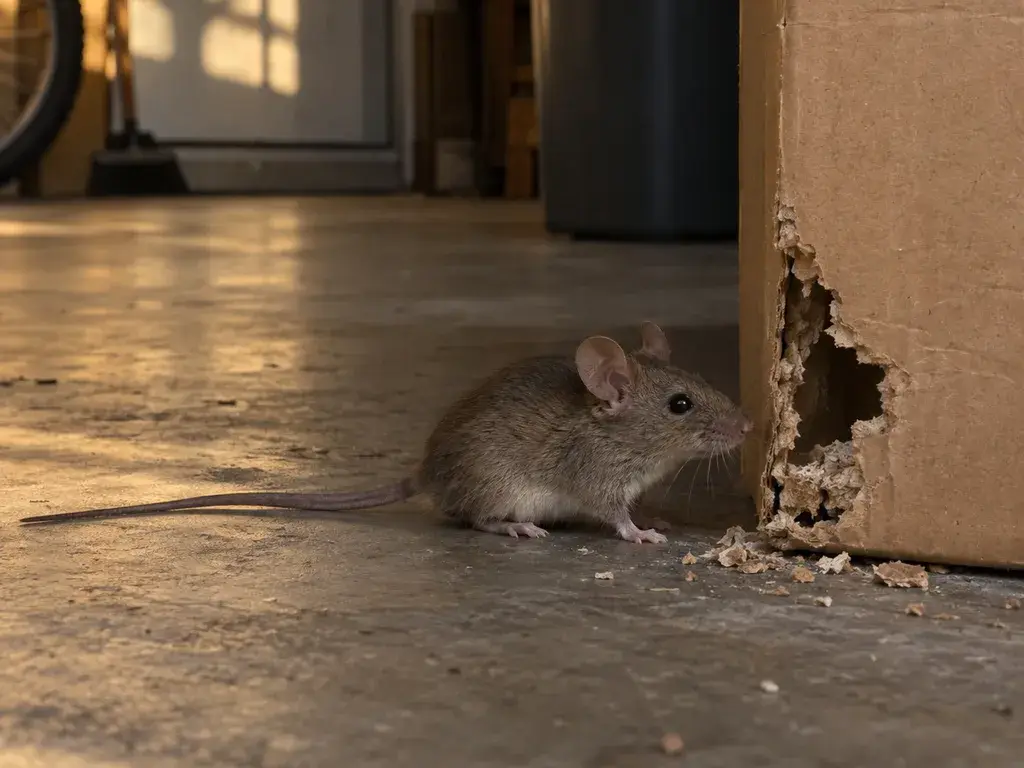
Autumn is when it happens in Southern Gateway, and it happens fast.
The first stretch of real cold moves them toward heated buildings, and they need very little: about a quarter of an inch for a mouse, a hole the width of a pencil.
They stay once they are in. There is nothing in your house that tells a mouse to leave in April, so a problem that starts in October is still a problem in spring unless the way in is closed.
Near the water there is usually more cover: dense planting, culverts, wood piles. Southern Gateway gives them somewhere to live within yards of the house, which shortens the trip and raises the pressure.
Why mice and rats do not go away on their own
A pair does not stay a pair. A house mouse can produce a litter every three weeks, and the young are breeding within two months. A single mouse in October is a family by Christmas.
The damage is not only the droppings. They gnaw to keep their teeth down, and what they gnaw includes wiring insulation and water lines. That is where a rodent problem stops being a nuisance.
Why the can from the hardware store makes it worse
Traps alone are a subscription, not a solution. You catch what is inside, the gap stays open, and the next one arrives.
Poison bought over the counter has a worse failure mode: the animal dies wherever it happens to be, which is usually inside a wall or under a floor, and the smell lasts weeks. It also carries a risk to a dog, a cat, or whatever eats the carcass outside.
The work that holds is exclusion: finding every gap and closing it with steel and mortar rather than foam. Trapping then finishes what is already inside, which is a short job once the door is shut.
When to stop trying and call
- Droppings in more than one room, or on more than one floor.
- Scratching in a wall, a ceiling or under the floor at night.
- Anything gnawed: packaging, a door corner, wiring.
- You saw one in daylight. Rodents are nocturnal; daytime activity means numbers.
- Traps keep catching and it does not slow down.
- License
- Held by the contractor and issued in Virginia. Ask which name it is held under — a trading name and the licensed entity are often not the same.
- Price
- Quoted before the work starts, not after. If a technician cannot say what the visit will cost before beginning, that is the moment to stop.
- The call
- Describing what you found commits you to nothing. Nothing is booked until you say so.
- Coverage
- By town, not by region. Southern Gateway and the towns around it.
What the visit includes
- 01
Inspection
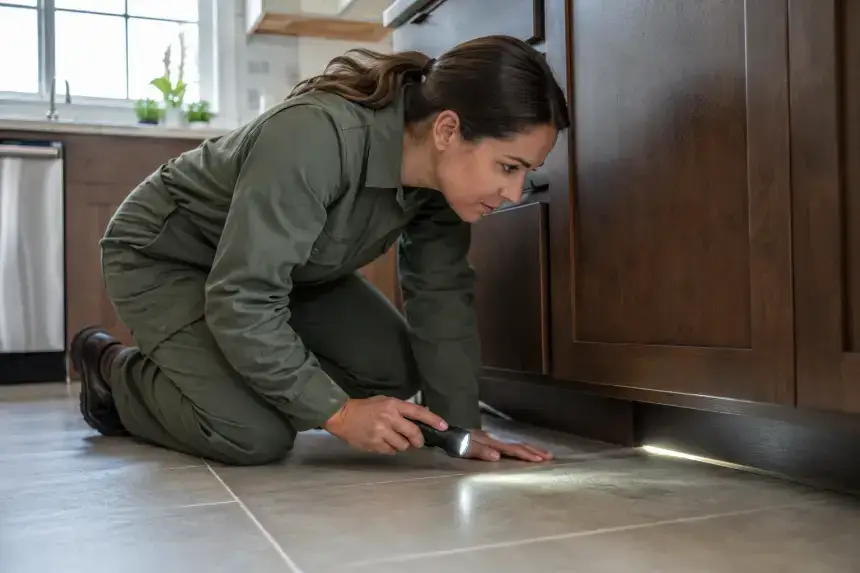
Inside, around the outside, and in the crawl space or slab edge where the trail usually starts. Identification comes before anything is applied.
- 02
The plan, out loud
What the pest is, what the treatment involves, how many visits it takes and what it costs — explained before any work begins.
- 03
Treatment
Aimed at the nest and the route to it rather than at what you can see. Products used indoors are chosen around pets and children in the house.
- 04
The follow-up
Some jobs need a second visit to catch what hatched after the first. A technician says so up front rather than after.
What to say when you call
- 01Where you found droppings, and how big they are — a quarter inch and pointed is a mouse, half an inch and blunt is a rat.
- 02Whether you hear scratching, and where.
- 03Whether you have found anything chewed — packaging, wiring, the corner of a door.
- 04Whether there is a crawl space or an attic, and whether it can be reached.
Do not put down poison before the visit. An animal that dies inside a wall cannot be removed without opening it, and the smell outlasts the problem by weeks.
Other pests in Southern Gateway
Rodents nearby