St. Marys, PA
Cockroach Control in St. Marys
A roach in the bathroom at night and a roach in a kitchen cabinet are different problems. Say which you have and a licensed exterminator can come out to St. Marys and treat it.
(844) 578-3029Licensed Pennsylvania technicians. No obligation for the call.
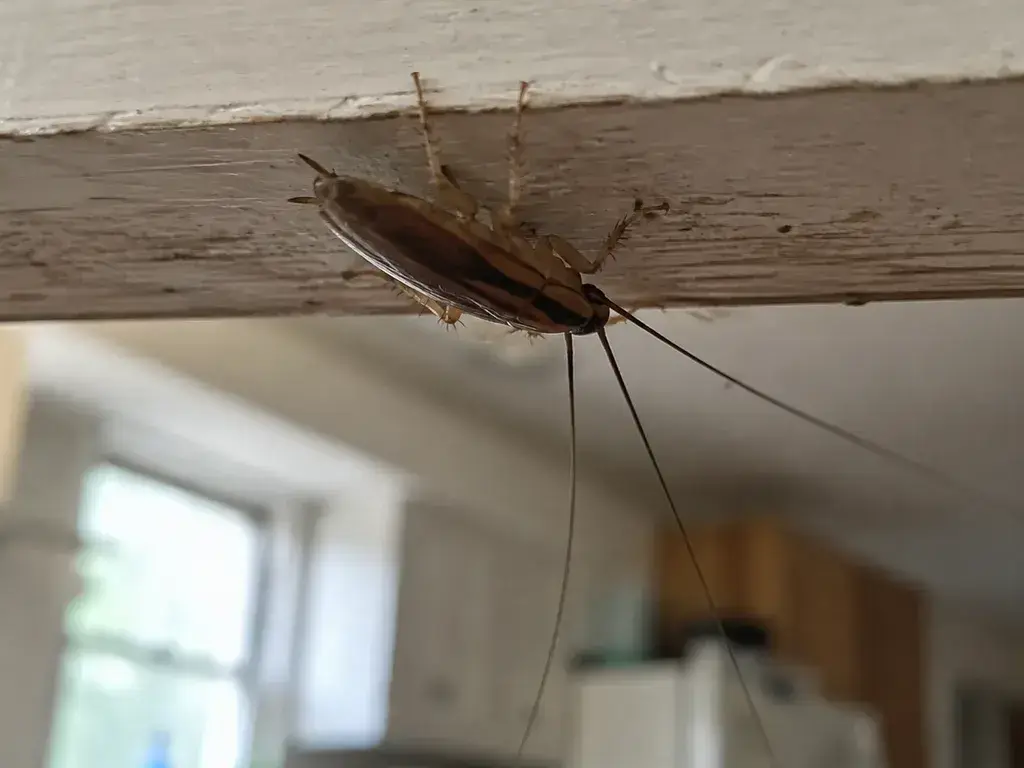
In St. Marys two different problems share one name, and the winter tells them apart.
The large ones — American and oriental — come from outside: a sewer line, a crawl space, a garage door seal. The first hard cold pushes them indoors all at once, and that is the autumn wave.
German roaches never went anywhere. They breed inside the building, behind a fridge motor and under a dishwasher, and a winter this hard does not touch them. Seeing them in February means the weather has nothing to do with it.
Inland, moisture is what they come for. The wet spot under a sink or behind a dishwasher is the most reliable water for blocks, and that is what a trail leads to.
Why cockroaches do not go away on their own
A single German cockroach is never a single cockroach. A female carries an egg case holding thirty or more, and she produces several in a lifetime. The insect you saw is the part that ran into the light.
They breed where you cannot look: the warm gap behind a fridge motor, the hollow of a cabinet frame, the void under a dishwasher. Seeing one in daylight means the harborage is full.
Why the can from the hardware store makes it worse
A fogger is the classic mistake here, and it is worse than doing nothing. It fills the room with a repellent mist that reaches none of the harborages and drives what survives deeper into the walls and into the next apartment.
After a fogger the problem is spread wider than it was, and the next treatment has more places to reach.
The professional approach is the opposite: gel bait placed where they actually live, plus a growth regulator that stops the next generation from breeding. Nothing is sprayed into the air.
When to stop trying and call
- You have seen one in daylight — that usually means the harborage is crowded.
- There are small ones. Nymphs mean breeding inside, not visiting.
- Anything that looks like ground coffee or pepper in a cabinet corner or drawer runner.
- A musty smell in a cupboard that does not go away.
- They came back within a month of spraying, or moved to another room.
- License
- Held by the contractor and issued in Pennsylvania. Ask which name it is held under — a trading name and the licensed entity are often not the same.
- Price
- Quoted before the work starts, not after. If a technician cannot say what the visit will cost before beginning, that is the moment to stop.
- The call
- Describing what you found commits you to nothing. Nothing is booked until you say so.
- Coverage
- By town, not by region. St. Marys and the towns around it.
What the visit includes
- 01
Inspection
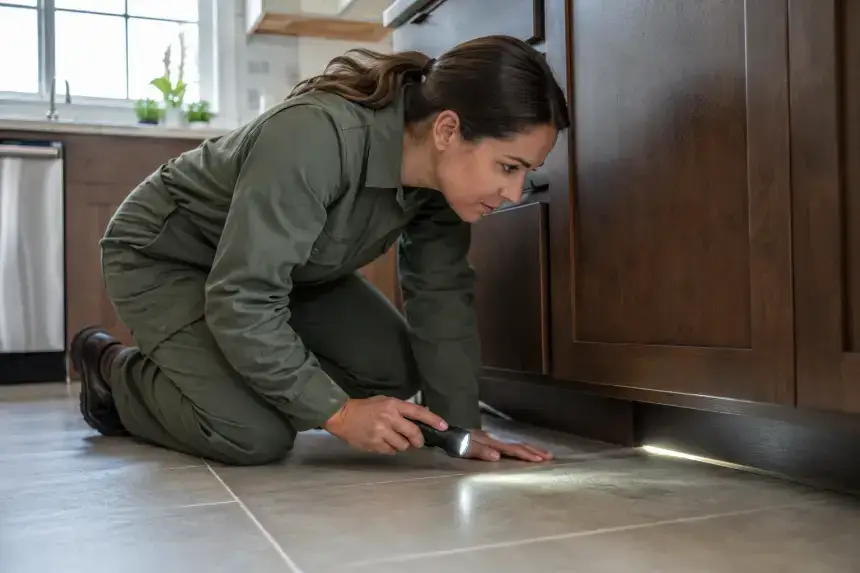
Inside, around the outside, and in the crawl space or slab edge where the trail usually starts. Identification comes before anything is applied.
- 02
The plan, out loud
What the pest is, what the treatment involves, how many visits it takes and what it costs — explained before any work begins.
- 03
Treatment
Aimed at the nest and the route to it rather than at what you can see. Products used indoors are chosen around pets and children in the house.
- 04
The follow-up
Some jobs need a second visit to catch what hatched after the first. A technician says so up front rather than after.
What to say when you call
- 01How big, and which room.
- 02Whether it was daytime when you saw it — roaches out in the day usually means the harborage is crowded.
- 03Whether you have seen a small one. Nymphs mean breeding inside, and that changes the plan.
- 04Whether the building has other units. Through shared plumbing it is one problem, not two.
Do not set off a fogger before the visit. It scatters them into wall voids and into neighboring units, and everything after that is harder — including finding where they actually live.
Other pests in St. Marys
Cockroaches nearby